Beekeeping in Latvia
For June, I have prepared a brief overview of beekeeping in Latvia. The authors are beekeepers from the ZS Jaunspieki bee farm, to whom I have been supplying Carniolan queen bees for several years. Although Latvia is exposed to adverse climatic conditions, bees thrive there.
See for yourself,
Ing. Pavel Cimala
Greetings, Czech beekeepers!
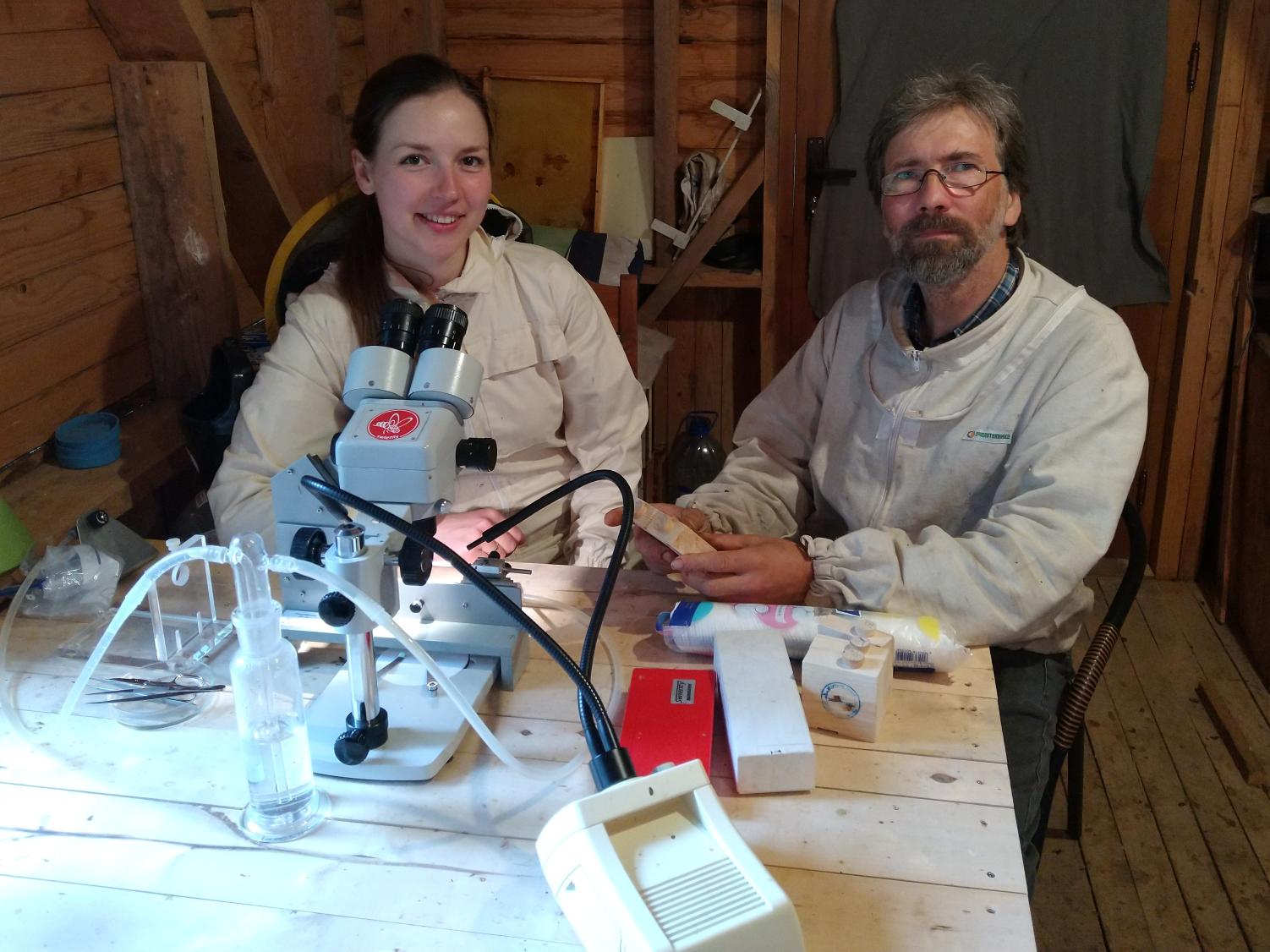
In Latvia, on February 25th, we welcomed the first flight of honey bees of the year. The first inspection will likely occur in early April, considering the weather conditions. But until then, we can introduce you a little bit to beekeeping in Latvia. The authors of this insight are one of the largest bee breeders in Latvia, Janis Purins from the farm ZS Jaunspieki, and the instrumental insemination specialist Agnese Smilga-Spalvina (see figure 1). Both authors collaborate and develop breeding work with 1000 bee colonies and four races: A.m.ligustica, A.m.carnica, A.m.carpathian, and Buckfast.
Latvia has approximately 3.6 thousand beekeepers, maintaining 105 thousand bee colonies and producing 2.45 thousand tons of honey annually (2023 data from Latvian Beekeeper’s Association). 51% of Latvia’s territory is covered by forests, which serve as significant nectar sources. The most common crops for pollination are rapeseed, buckwheat, field beans, apple trees, blueberries, etc. Beekeepers collect different kinds of monofloral honey, such as linden honey, dandelion honey, apple tree honey, rapeseed honey, buckwheat honey, heather honey, etc. In 2023, high-quality honeydew honey dominated.
Various races of queen bees are used in Latvia: A.m.carnica, A.m.carpathian, A.m.ligustica, A.m.mellifera, and Buckfast. The most popular are Buckfast queen bees, but in the eastern part of Latvia, due to longer winters, A.m.carnica bee colonies are used more widely.
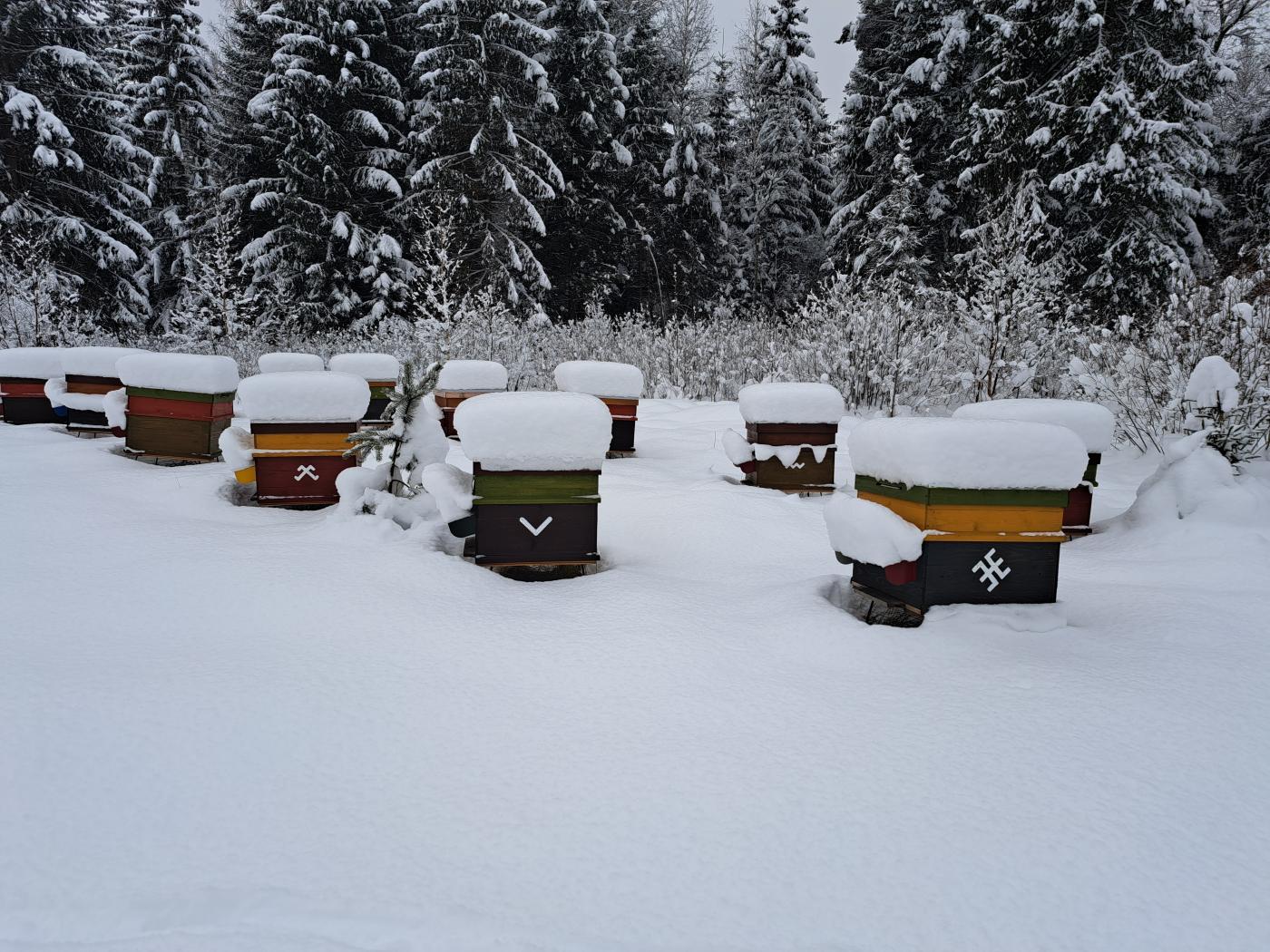
Preparation of bee colonies for winter and feeding typically occurs in September and the first half of October. Broodless state of bee colonies usually is from November to January. Usually, cold weather and thick snow cover last until April (see figure 2). Winters vary each year; for example, winter was relatively mild this year but with several cold records, such as in early January in central Latvia, where the daily air temperature ranged from -11 °C to -26 °C. The duration of winter in Latvia varies by two weeks across the territory. The western part, closer to the Baltic Sea, experiences milder winters and cooler summers than the eastern part. Last summer was hot and dry, maintaining daytime temperatures above +30°C for a multiple weeks.
The development of bee colonies resumes at the end of March and the beginning of April when the first pollen and nectar (willows) appear in nature. The peak nectar flow occurs in May and June. In general in July and August there is absence of nectar. In July, many nectar-bearing plants sown by beekeepers, such as phacelia and borage, bloom. In August, the main nectar flow comes from buckwheat and heather.
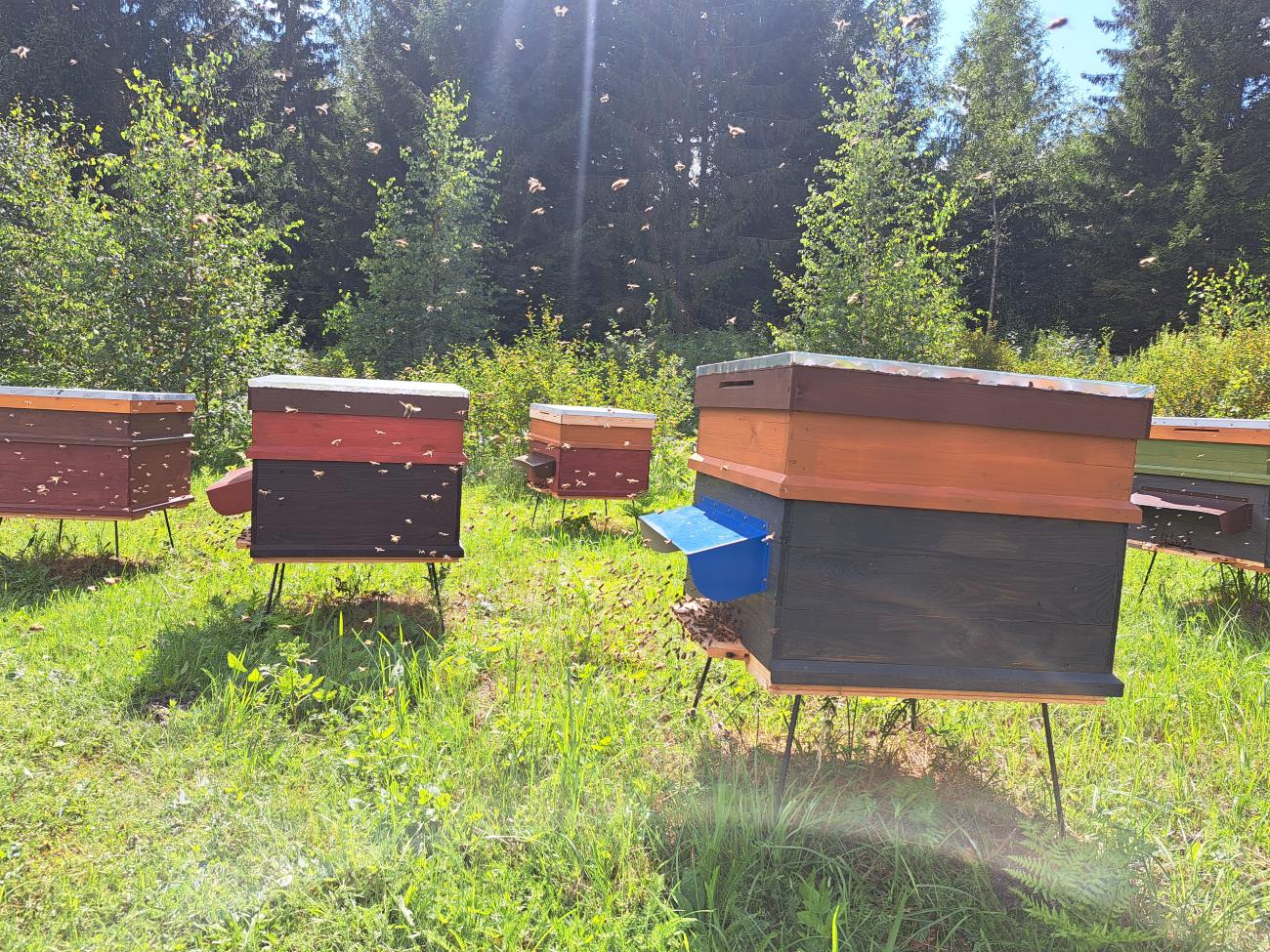
Various types of beehives are used in Latvia: polystyrene hives from Finland and Poland, wooden multi-body hives, Norwegian-style hives, self-made hives in multiple sizes, and the traditional Latvian standing hive. The Latvian standing hive has a floor, a brood body, two honey bodies, and a roof (see Figure 3).
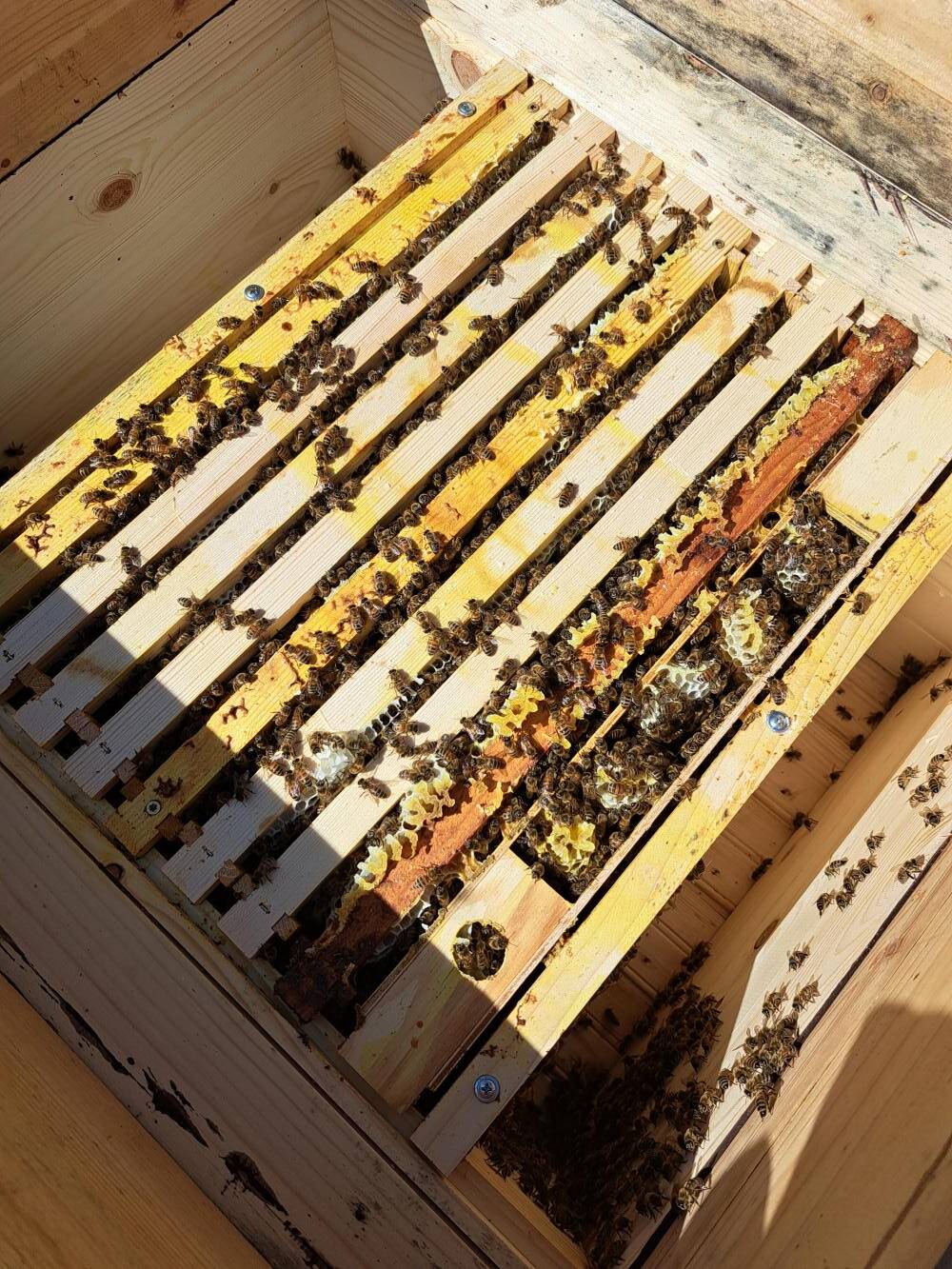
Dadan-Blatt frames (435 mm x 300 mm) are used in the brood body, with a top bar of 465 mm and a frame shoulder width of 37 mm. The brood room capacity of the Latvian standing hive is 15 frames. Special wooden top-bottom opened boxes are used in honey rooms, with a capacity of 12 honeycomb frames. Honeycomb frames size are 435 mm x 145 mm, a top bar of 465 mm, and a shoulder width of 45 mm (see figure 4).
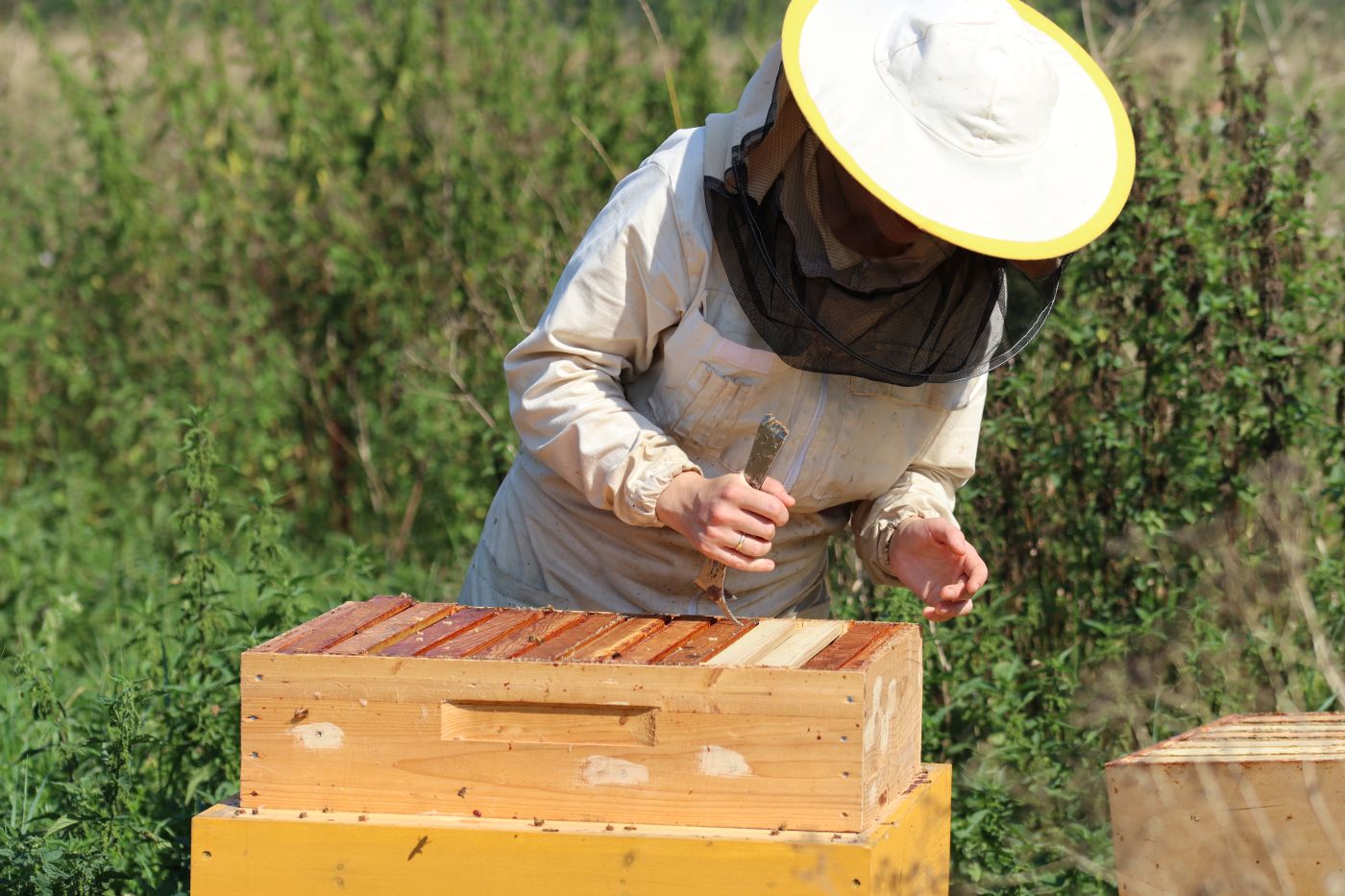
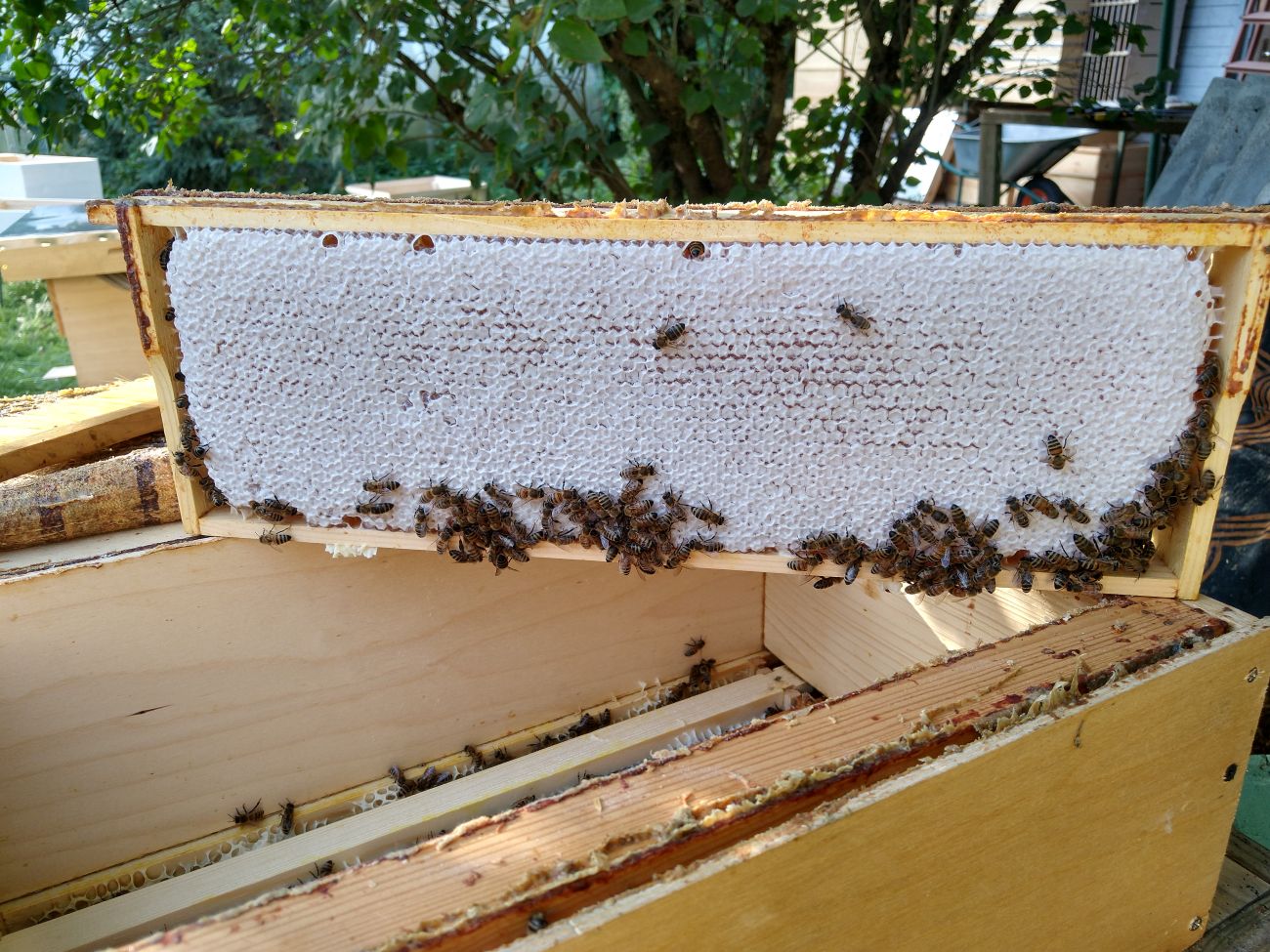
With wider shoulder width, the honey frames have deep cells and greater capacity, but bees seal the honey later. The volume of the standing hive brood body is 81.7 L. In a strong bee colony, the volume of the populated beehive can triple during the season. These hives are massive, movable by two persons. However, they are very suitable for stationary apiaries, more resistant to damage from forest animals, and more stable during windy weather than polystyrene hives.
Beekeeping methods, types of hives, races of bees, etc., differ drastically between beekeepers. The best choice is the one with which the beekeeper feels most comfortable and is able to work most efficiently. Have a sweet 2025 season!