An Enthusiastic Beekeeper from The Italian Dolomites I.
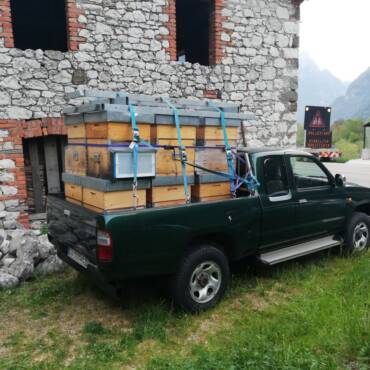
For July Beekeping, I have prepared an article by an enthusiastic beekeeper from the Italian Dolomites. Migrating bee colonies between the Venetian lowlands and the slopes of the Dolomites allows for the use of diverse honey crops in different climatic conditions.
Pavel Cimala
Hello, beekeepers from the Czech Republic!
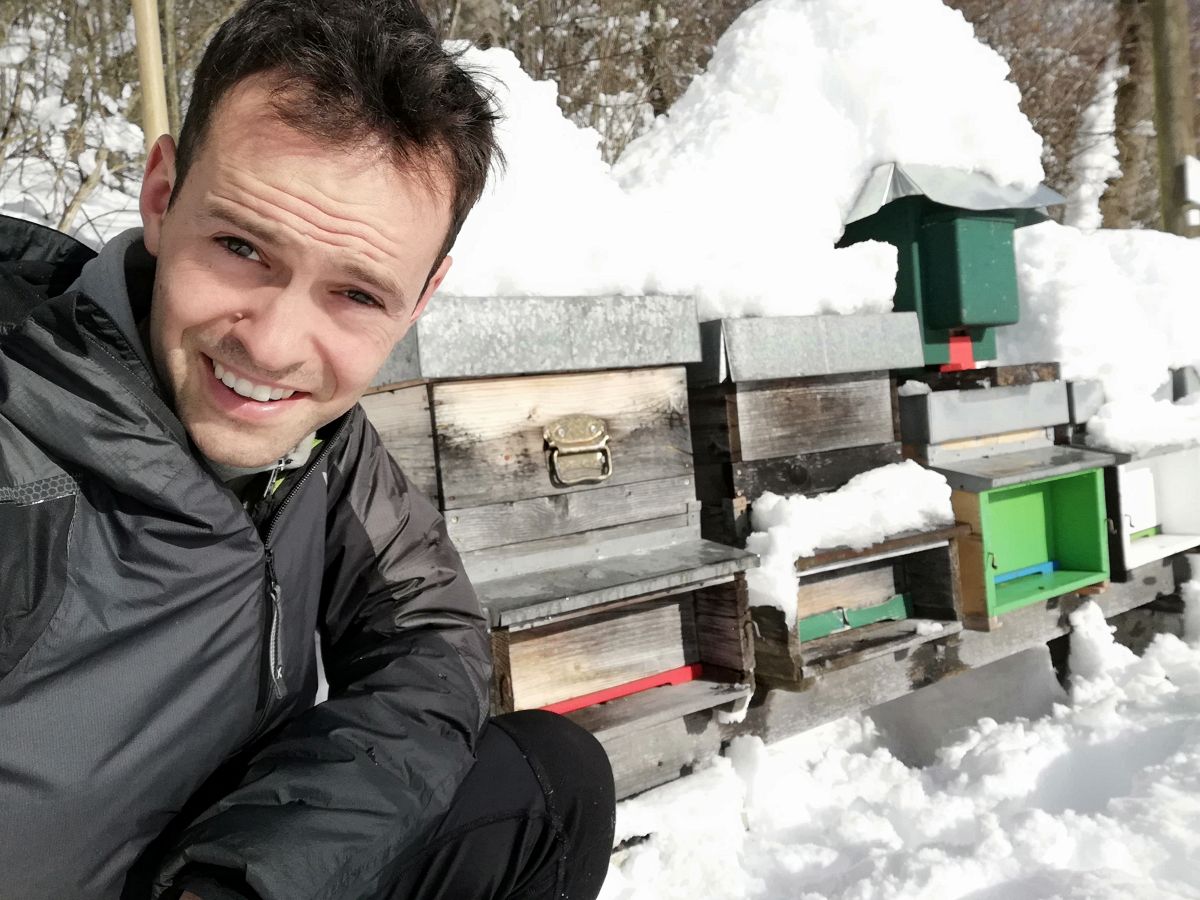
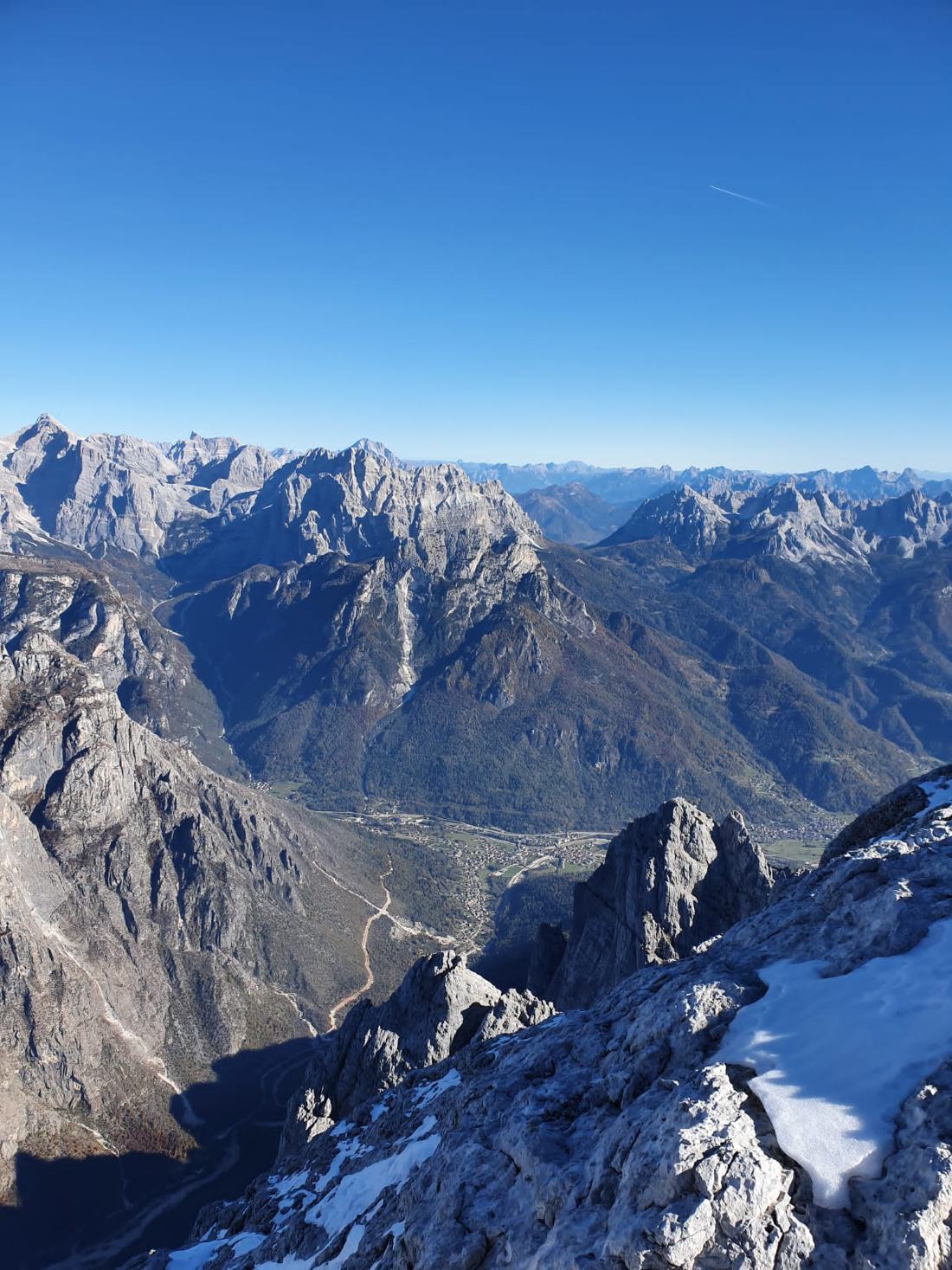
My name is Matteo Todesco, I am 35 years old and I am a small semi-professional beekeeper from La Valle Agordina, a small village located at an altitude of 800 m in the Agordino Dolomites in the province of Belluno (Italy). In the midst of these beautiful mountains, I have been managing around 30 bee colonies using organic methods since 2010.
With my 30 colonies, I can potentially produce up to five different types of honey. Unfortunately, the weather does not allow this every year. In the spring, I migrate to the Venetian lowlands, then return to my mountains when nature provides nectar.
Bees
Right from the start, my teacher Panciera Renato, an experienced professional beekeeper, taught me how essential it is to have high-quality bees for rational and economically viable beekeeping. The natural choice was Apis Mellifera Carnica, the perfect bee for our Alpine region.
The original bee, as described by older beekeepers, was dark, small in size, and prone to swarming. A professional beekeeper described it as a probable cross between Apis Mellifera Mellifera and Apis Mellifera Carnica. Over the years, Apis Mellifera Ligustica was also introduced to our region. It was probably brought in by workers who commuted to the lowlands for work. Old beekeepers also say that in the years after World War I, more than 200 Apis Mellifera Ligustica colonies arrived in the country. They were supposed to replace the colonies that the Austrians had captured during the war. The result today is a hybrid that is completely unsuitable for breeding. It is extremely swarmy and aggressive, with unsatisfactory spring development.
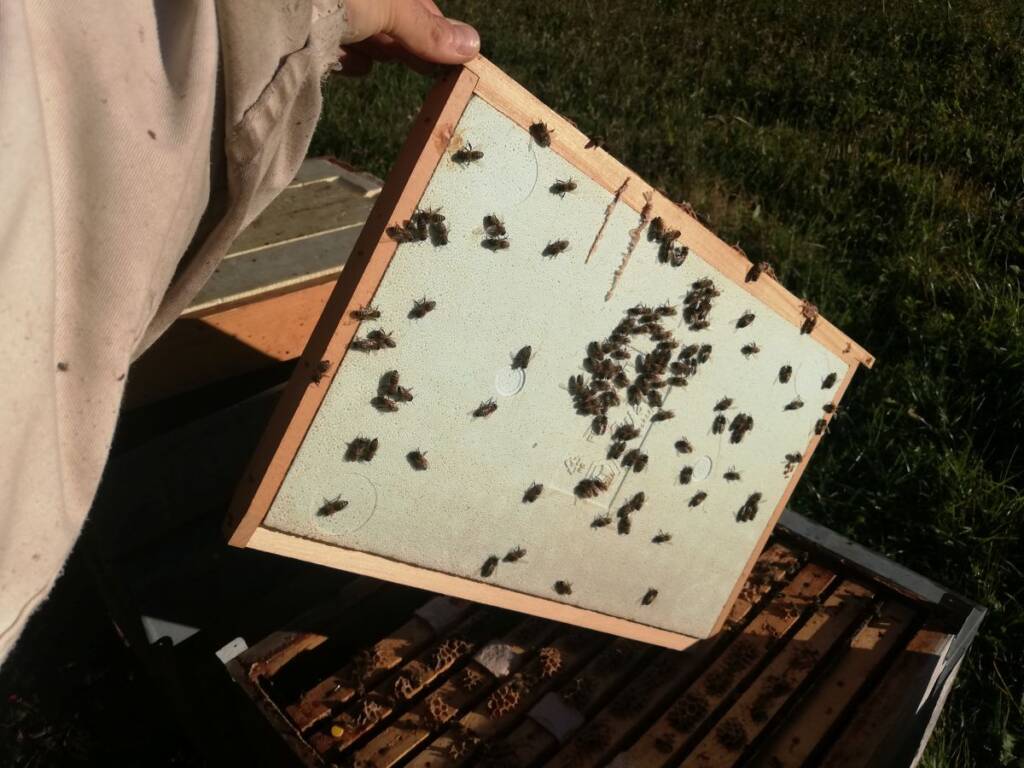
My queens come from Austria, Germany, and the Czech Republic (Carnica Cimala). Each line is selected for specific characteristics, and I only breed those most suitable for the given area in an effort to maintain high genetic variability. I believe it is right to produce many drones with excellent characteristics. Fortunately, in recent years, beekeepers’ interest in restoring the Carniolan honeybee has been growing. The road to complete restoration of the Carniolan honeybee is still long, because on the Italian market you can usually only buy F1 Carniolan hybrids.
Personally, I breed queens for my own use and for a friend who is a professional beekeeper. Mating takes place in a deep valley 6 km long, surrounded by the peaks of the Dolomites, which reach 3,000 m above sea level. Mating in this valley allows us to breed queens with excellent results in terms of purity. This gives me more pleasure than honey production. Having docile bees that are easy to work with, swarm very little, and have strong spring development is the greatest satisfaction for me.
My beekeeping
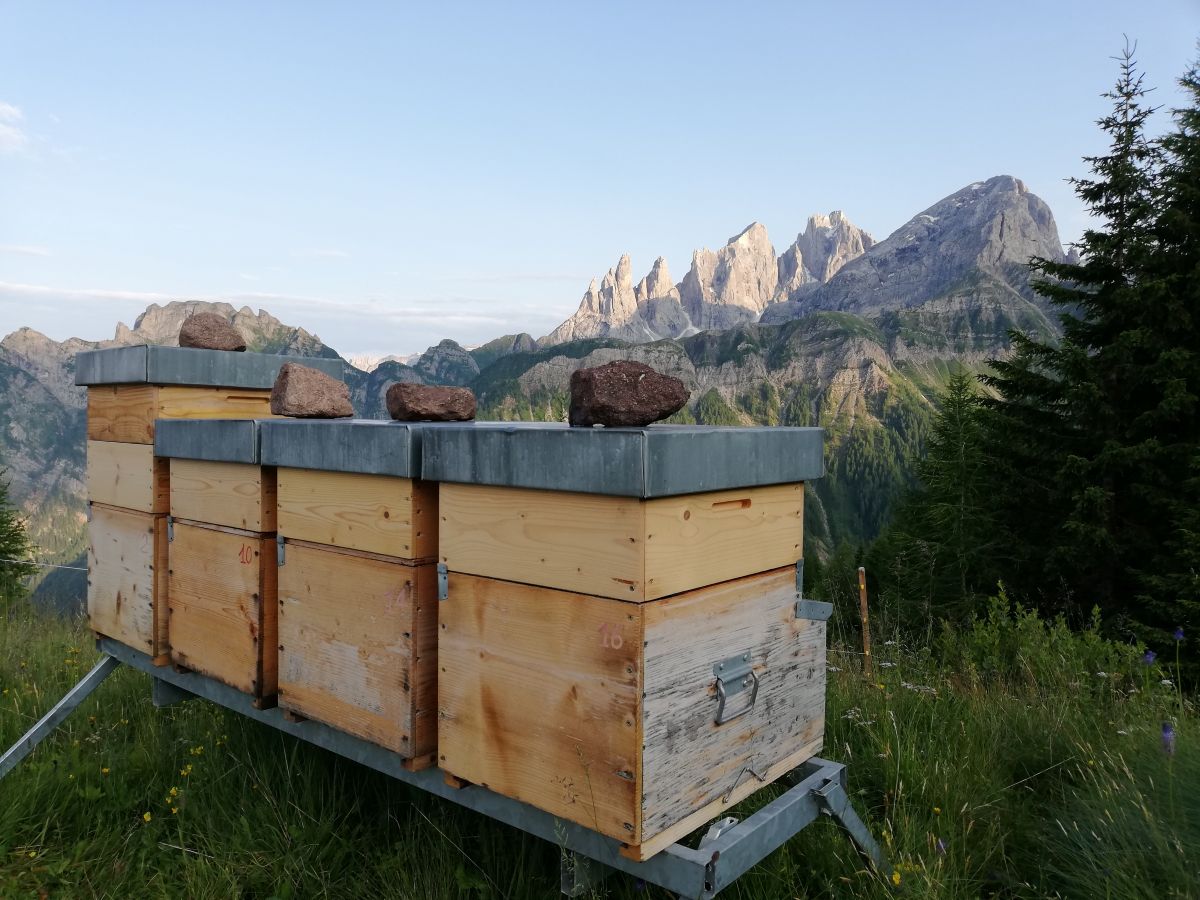
The hive I use is a classic Dadant-Blatt with 10 wooden frames. It is the most common type in Italy. It is called “Italica Clarini.” The hive is protected from rain and snow by a vestibule. This is also excellent for moving the hive. In recent years, I have been switching to Dadant hives with ten frames, but with a movable bottom and no vestibule. They are lighter and shorter, so I can load more colonies onto the trailer. I can place the honey supers either above or below the brood chamber. I learned this from your Dadant Club website. It is a very useful system for storing winter supplies without taking up space for August brood. I also tried using hives with two brood chambers, but it didn’t work for me. After years of evaluation, I found that Dadant is the most practical system for beekeepers, and at the same time, queens establish larger brood areas on large combs.
In February, the strongest colonies remain in the mountains. I narrow four to six combs fully occupied by bees with two insulating partitions, one on the left and one on the right. This completely closes off the brood chamber on all sides to minimize the volume occupied by bees. Then I leave one or two storage combs (combs for replacement), a third partition made of hardened polystyrene mounted in a Dadant frame (i.e., with a passage for bees on all sides). The lid is insulated with 6 cm of polystyrene plus 1 cm of wood.

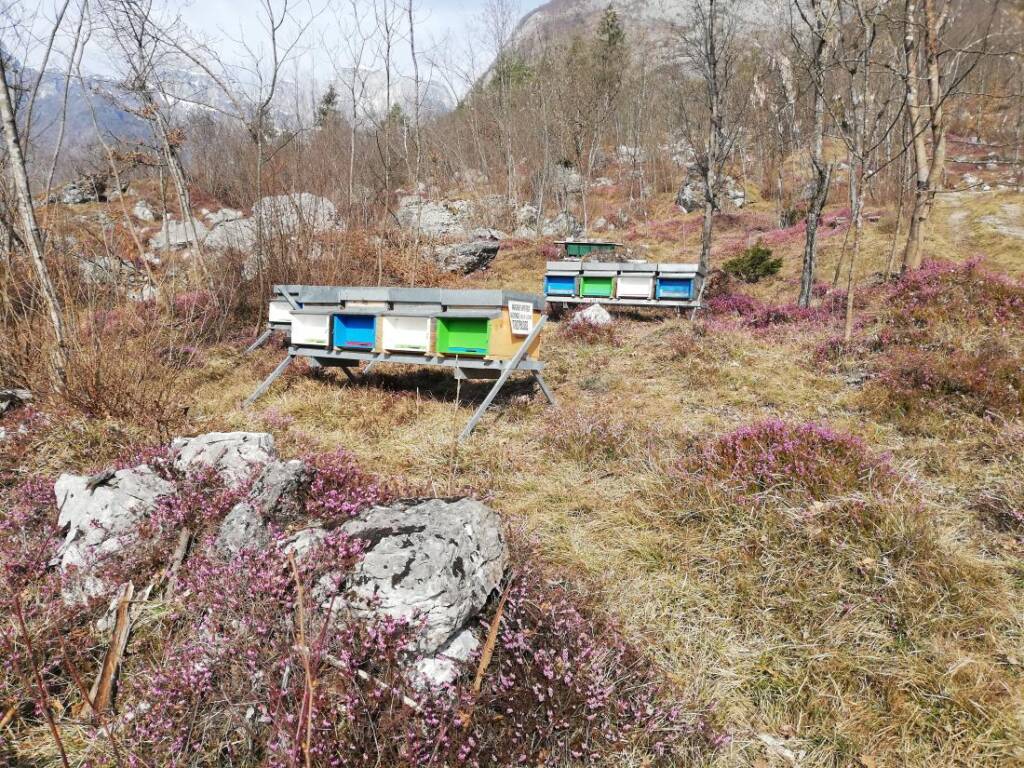
These strong colonies devote themselves to collecting Erica Carnea (heather) in March. If snow, wind, and temperature permit, the colonies produce a very rare and excellent honey with a caramel flavor. With medium and weak colonies, I migrate to the lowlands in search of warmth, anticipating the April harvest from cherry trees and dandelions. At the beginning of May, I transport most of the colonies to acacia groves in the plains. If the spring is warm, I leave some colonies in the mountains where they take advantage of the excellent maple harvest. June is the month of flowers in the mountains, with meadow flowers, raspberries, rhododendrons, and sometimes even spruce honeydew. In the lower parts of the valley, linden trees bloom profusely at the end of June.
To be continued…